

🎉
Mozzaik becomes Jint — new identity, same mission.
Learn more
🎉
Mozzaik becomes Jint — new identity, same mission.
Learn more
🎉
Mozzaik becomes Jint — new identity, same mission.
Learn more
🎉
Mozzaik becomes Jint — new identity, same mission.
Learn more

Exclusive: SharePoint Modern's multilingual module managed with Jint

Florian Bouron
September 18, 2018
5 minutes
Jint Lookbook — inspirations for a modern and engaging Digital Workplace
Explore The Best Intranet Examples
Get our free LookBook!

Table of content

Jint Intranet Specifications — guide to designing an effective intranet on Microsoft 365
2026 Guide. The Best Specification Template For Your Futur Intranet
Download our free template

It is now clear that the native version of Modern SharePoint does not have a multilingual system that allows the creation of sites in several languages. Especially since the translation that is offered is not always reliable.

In the Jint solution, the multilingual component has been designed to meet this need simply.

We are very proud to have over 15 languages: English, French, Chinese (Simplified, Dutch, Hungarian, Italian, Japanese, Polish, Portuguese, Romanian, Russian, Spanish, Thai, Turkish).

A typical example: an English-speaking user arrives on a page of a French site. Thanks to the integration of multilingualism, he sees a message indicating that the content exists in his language. Content that has been translated by an expert contributor in the expected language. This message is accompanied by a language selector which suggests that the page be transcribed into English.

However, if there is no corresponding page, the user will not get a message. However, they can still use the language selector to go to the English version of the site.

How it works

Beforehand, two actions are required to facilitate the proper operation of this feature:

  1. From the original content, the contributor who has mastered the translation activates the "propagate" option in the site of the language he wants. They can also link it to an existing page that is already available in that site's version.
Multilingual intranet portal under sharepoint and office 365
  1. Once this is done, the user simply goes to the page that has just been copied through a link provided. Once the page has been edited, when the user selects the target language, the translated page will be available:
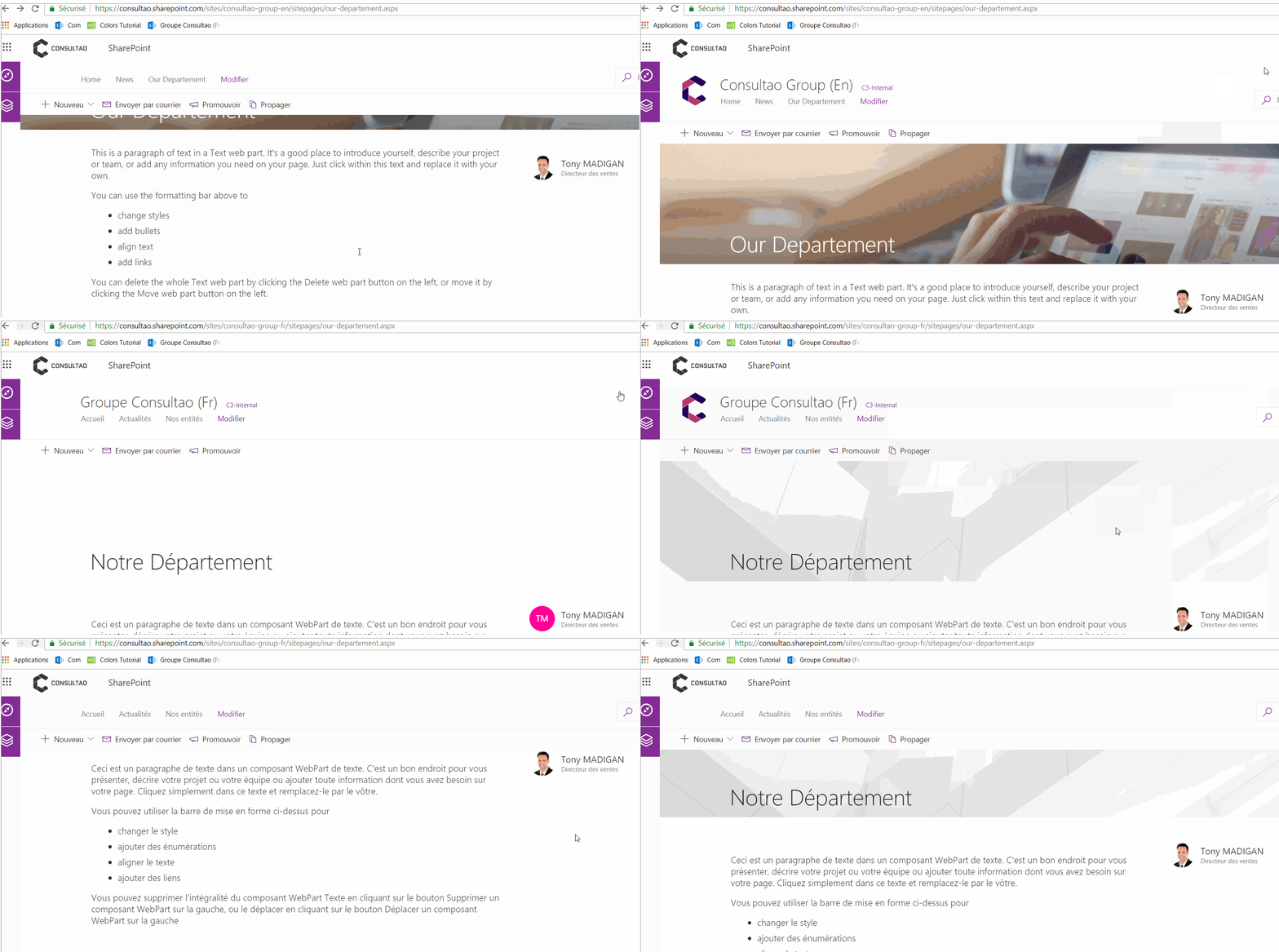
multilingual digital workplace office 365, SharePoint modern

The strengths of multilingualism with Jint

This component has clear advantages in offering users multilingual spaces:

  • The user can switch from one language to another using the switch available in the page header
  • The contributor can easily copy the pages of a site from one language to another and save time on editing.
  • The contributor can edit different languages on the same page easily, just by switching versions with the language switcher

Simple prerequisites

There are a few prerequisites to take full advantage of the multilingual component:

  • You must be on the Modern version of SharePoint
  • You need to have the unified experience enabled to use it

Jint Intranet Specifications — guide to designing an effective intranet on Microsoft 365
2026 Guide. The Best Specification Template For Your Futur Intranet
Download our free template
Author
Florian Bouron - CEO of Jint
Florian Bouron
Category
Collaboration
Published date
September 18, 2018
Share article

What is a Microsoft SharePoint intranet?

chevron down icon

A Microsoft SharePoint intranet is an internal digital platform that centralizes information, documents, communication and collaboration within an organization, in a secure environment integrated with Microsoft 365. It is built on SharePoint Online, accessible from any browser or via mobile apps, and integrates natively with Teams, Outlook, OneDrive and the Power Platform. A SharePoint intranet enables organizations to publish news, manage document libraries, structure knowledge, facilitate team collaboration and provide employees with a personalized digital home base — all within their existing Microsoft 365 ecosystem. Solutions like Jint extend these capabilities with a modern branded UX, 60+ ready-to-activate features and advanced editorial workflows.

Does SharePoint support document management (DMS)?

chevron down icon

Yes. SharePoint includes comprehensive DMS features: structured document libraries (up to 30 million files per site), unlimited versioning, metadata with keyword management, granular access rights, automated archiving via Microsoft Purview, e-signature via Microsoft Approvals, and compliance with ISO 27001, GDPR, HIPAA and SOC 2 standards. For advanced DMS needs (complex approval workflows, OCR, AI classification), SharePoint Premium (€10/user/month) adds Syntex.

How many languages are supported by Jint Translator?

chevron down icon

As of now, Jint Translator supports more than 100 languages. This ensures that global teams can seamlessly communicate, access information, and collaborate in their preferred language, breaking down language barriers across your organization.

How do you set up document management (DMS) in SharePoint?

chevron down icon

Setting up a document management system in SharePoint starts with defining a library structure based on your document types and access requirements, then configuring metadata columns for filtering and search. Enable versioning to track changes, configure retention policies in Microsoft Purview for compliance, and set up permissions by group rather than individual to make access management sustainable. A well-structured SharePoint DMS eliminates email attachments, ensures employees always access the latest version, and provides a full audit trail.

What are the best practices for organizing documents in SharePoint?

chevron down icon

Organizing documents in SharePoint effectively means using metadata (managed properties, content types) rather than complex folder hierarchies, which become impossible to navigate at scale. Create a flat folder structure with no more than 2-3 levels and rely on views, filters, and search to help users find content. Establish clear naming conventions, enable versioning, set up document expiry alerts for time-sensitive content, and assign content owners to maintain quality over time.

Don't miss these

More similar articles