



What is an HR intranet?
An HR intranet is the part of your company intranet built for human-resources processes and communication: onboarding journeys, org charts, internal policies, benefits information, and employee self-service. It isn't a separate portal bolted onto your stack. It lives inside your main intranet, so employees find HR information in the same place as company news, team directories, and everyday tools.
That distinction matters more than it sounds. An HR intranet is not your HRIS (payroll, contracts, leave requests stay there). It's the layer that turns HR processes into something employees actually experience, starting with the first one that shapes everything else: onboarding.
Why the first 90 days decide more than you think
Most companies underinvest in onboarding because its cost is invisible. The number that should change that: according to Microsoft's own documentation for its SharePoint onboarding templates, updated in June 2026, structured onboarding is linked to 69% higher retention at the three-year mark and 50% higher productivity among new hires. Gallup adds a sharper detail: employees are 3.4 times more likely to describe their onboarding as exceptional when a manager is actively involved.
The flip side costs just as much. Employees lose an average of 1.8 hours a day, nearly a full workday every week, hunting for information they can't find, according to McKinsey's "The social economy" research. New hires feel that gap hardest: no muscle memory for where anything lives, no informal network to ask. It shows up in the numbers too: roughly 22% of new hires leave within their first 90 days, and a majority cite a lack of structured guidance as the reason, according to InsightGlobal's 2026 workforce research. An HR intranet exists to close exactly that gap, from day one rather than month six.
What an HR intranet actually does
Beyond the buzzword, an HR intranet covers a specific set of use cases. Here's what shows up in practice:
- Structured onboarding. A guided path through the first days and weeks, not a folder of PDFs emailed the night before.
- HR self-service. Policies, benefits, leave procedures, and forms that employees can find without opening a ticket.
- Employer branding. The internal side of the brand promise made during recruiting, kept visible after signature.
- Culture and recognition. Company news, team milestones, and the everyday signals that make a workplace feel like one.
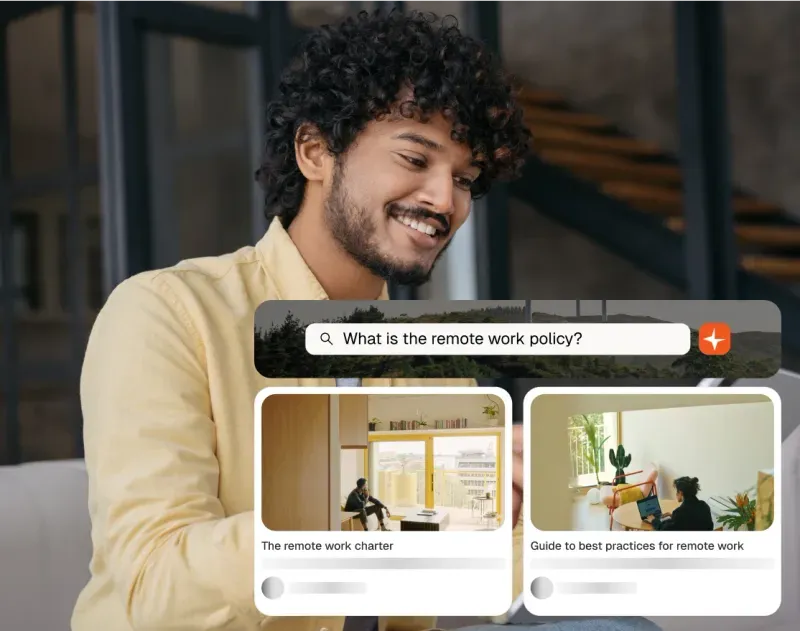
- A searchable directory. Org charts, roles, and contacts new hires need without asking a colleague every time.
Every one of these already lives, at least partly, in a well-structured company intranet. An HR intranet isn't a new system: it's that structure applied deliberately to the employee lifecycle. Companies that treat these as five separate initiatives usually end up with five half-finished ones. Companies that treat them as one intranet, built around one lifecycle, tend to actually ship all five.
Structuring onboarding: before day one, day one, and the first 90 days
Microsoft's own approach to onboarding on SharePoint, its New Employee Onboarding (NEO) sites (updated June 2026), splits the journey into three stages worth copying regardless of the tooling: a pre-onboarding site shared with the candidate before their start date, a corporate onboarding site covering company-wide orientation on day one, and a departmental site with team-specific tools and contacts.
What makes this model work isn't the templates themselves, it's the sequencing. Access and paperwork happen before day one, so day one is about people and culture, not forms. Company-wide orientation comes before team-specific detail, so new hires get context before depth. And the journey extends through the first 30, 60, and 90 days with checklists and milestones, rather than stopping the moment the welcome email is sent.
The same sequencing logic applies whether the new hire sits at headquarters or works a shift on a retail floor or a job site. A frontline employee without a desk still needs pre-boarding access, a day-one orientation, and a 90-day path, just delivered somewhere they'll actually open it: a phone, not an inbox they check once a week.
Employer branding and employee experience beyond day one
Onboarding is the first real-world test of the employer brand a candidate signed up for. According to Enboarder's 2025 onboarding research, 86% of new hires decide how long they'll stay within their first six months. An onboarding experience that matches the recruiting story turns that window into a retention lever. One that doesn't turns it into an early-exit risk, no matter how strong the offer letter was.
That same logic extends past onboarding. An HR intranet that keeps surfacing culture, recognition, and internal mobility gives employees a reason to stay engaged well after their first quarter, and gives HR teams a channel that's not limited to an annual survey. A social intranet layer, where employees can react to news, ask questions publicly, and see leadership respond, does more for retention over a year than any single onboarding checklist does in a week. Employee experience is a continuous thread, not a first-week event, and most intranets that fail fail precisely because they stop being useful after launch week.
Native Microsoft 365 HR intranet or a separate HR portal: an honest comparison
A dedicated HR portal product has one real advantage: HR-specific workflows built in from day one, sometimes deeper than what a generic intranet offers out of the box. That depth comes at a cost that's easy to underestimate at decision time.
For most companies running on Microsoft 365, a separate HR portal means duplicating a directory, a permissions model, and a design system that already exist. The exception is when HR workflows are genuinely complex enough to need dedicated software, payroll processing or applicant tracking, for instance, in which case the two coexist: the HR intranet stays the front door employees actually use, the specialized tool handles the transaction behind it. What rarely earns its cost is a second front door for content the intranet could already carry: policies, org charts, onboarding checklists, internal news.
How Jint structures your HR intranet on SharePoint
Building an HR intranet doesn't mean starting from scratch or adding a new tool. With Jint SharePoint, onboarding journeys, a searchable employee directory, and role-targeted HR news all run on your existing intranet structure, styled to match the rest of your company intranet rather than looking like a bolted-on module.
For frontline and field employees who don't sit at a desk, the same onboarding content and directory extend to Jint Mobile, so a new hire in a store or on a site gets the same structured first 90 days as someone starting at headquarters. If you're mapping out what a complete HR intranet should include before you build one, our employee directory checklist is a practical starting point.
An HR intranet is a retention lever, not a side project
Treating HR communication as an afterthought costs more than it saves: scattered onboarding slows every new hire down, and a directory nobody maintains erodes trust in every other tool you run. The real question isn't whether to build an HR intranet, it's whether the one you already have is structured around the moments that matter most.
On a well-structured Microsoft 365 intranet, HR communication isn't a new project: it's the same foundation, pointed at your employee lifecycle. See what that looks like for real companies running it, or request a Jint demo to see it on your own tenant.

.webp)


